
Middle School Program
Academics
Explore. Take Chances.
Middle School
The Middle School is a special community within the larger community of The Northwest School.
It embraces the unique and dramatic transition from childhood to adolescence by providing a safe and inclusive environment and a challenging program. Teachers encourage students to take risks and provide support in order to help them develop a sure sense of who they are and what they can accomplish.
The academic program is rich, well structured, and interdisciplinary when appropriate. Students are always involved in two different arts classes and have regular physical activity periods. The advisory program ensures that there is strong, open communication between students and teachers, as well as between teachers and parents/guardians. After their time in Middle School, our students are ready to take on the more demanding academic challenges found in the Upper School.
Exploration is the Path to Discovery
Dedicated Academic Team
Our close-knit Middle School has its own Director and Dean of Students, and teachers experienced in teaching middle school. This...
Dedicated Academic Team
Our close-knit Middle School has its own Director and Dean of Students, and teachers experienced in teaching middle school. This team fosters community and a love of learning at the age when students are developing their attitudes towards school.
Foundational Skills
The Foundations program ensures our sixth graders adjust to secondary school socially, academically, and technologically. They’ll work on mastering organizational...
Foundational Skills
The Foundations program ensures our sixth graders adjust to secondary school socially, academically, and technologically. They’ll work on mastering organizational skills, build laptop skills, and will be introduced to Mandarin and Spanish. It’s the perfect start for their seven-year journey.
Identity & Belonging
Students learn about themselves and explore their differences through participation in affinity groups and days of learning. The grade level...
Identity & Belonging
Students learn about themselves and explore their differences through participation in affinity groups and days of learning. The grade level experiences, and advisory meetings introduce belonging and community. Collectively these experiences promote the capacity for acceptance and connection with peers.
Collaboration and Teamwork
We create a fun and supportive sports experience for middle school students of all abilities and experience levels. Students will...
Collaboration and Teamwork
We create a fun and supportive sports experience for middle school students of all abilities and experience levels. Students will develop self-confidence, a sense of community, and respect for the different strengths of their teammates. They will also learn to work together for a common goal and learn about the importance of building healthy habits.
Stretch Experiences
Hiking, climbing, camping, skiing, biking. These experiences foster independence and build confidence. Our outdoor program is designed to engage our...
Stretch Experiences
Hiking, climbing, camping, skiing, biking. These experiences foster independence and build confidence. Our outdoor program is designed to engage our youngest students and adapts as their skills develop. In 8th grade students have the opportunity to travel abroad, last year 8th and 9th grade students traveled to Costa Rica.
Arts Exploration
An arts education opens the mind to new ways of seeing the world. It builds character, confidence and improves academic...
Arts Exploration
An arts education opens the mind to new ways of seeing the world. It builds character, confidence and improves academic outcomes. Middle school students begin to develop creative thinking skills as they learn to explore artistically. We believe every mind is a creative one, waiting to be discovered.
Raising Money for St. Jude Children's Research Hospital
6th and 7th Graders from the Rainbow Connection affinity group, decided to have a bake sale to raise money for children in need. With support from their Humanities teacher, they sent a cashier's check for $301.00 to St. Jude's Children's Research Hospital, selected for their important work treating childhood cancers and pediatric diseases. The Rainbow Connection affinity group welcomes middle school students who want to relate on topics of mutual concern or have a marginalized identity.
Curriculum Details by Grade
Sixth Grade
Sixth-grade curriculum facilitates student integration into the middle school community.
Seventh Grade
Designed to meet 7th graders where they are at in both their personal and academic growth.
Eighth Grade
Designed to support and engage 8th graders as they step into leadership roles and complete their final year of Middle School.
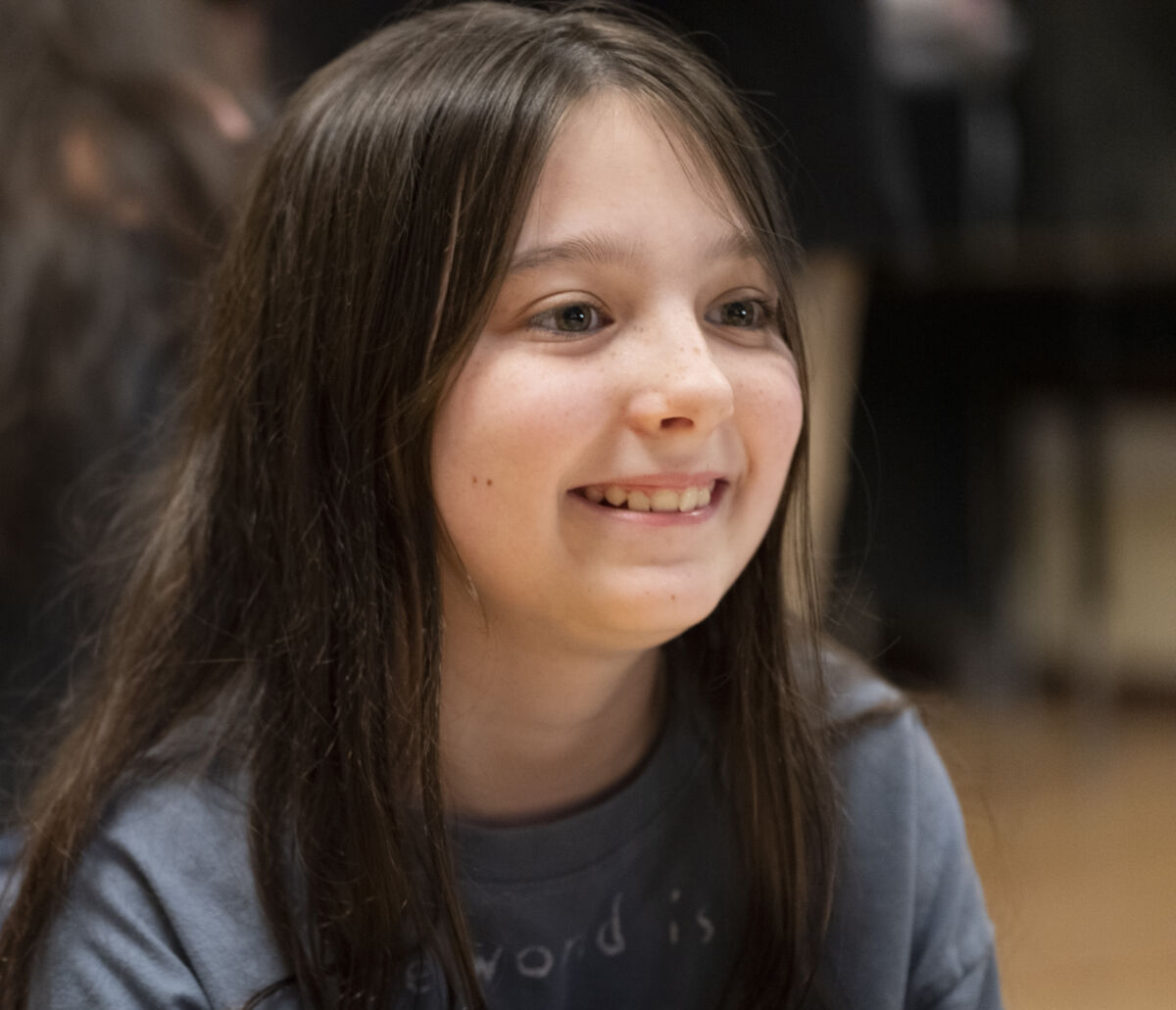
Grade Level Overview – 6th Grade
6th grade curriculum facilitates student integration into The Northwest School community and fully engages them in the learning process.
Our goal is to provide a supportive environment that challenges students to grow, both socially and academically. We focus on providing appropriate levels of support while guiding students to become independent, self-aware learners and community members.
Weekly study halls staffed by 6th grade advisors help ease the transition from elementary school to middle school, offering 6th graders opportunities to seek assistance and check in with teachers while also managing their own workload.
Weekly Advisory groups, supported by the Foundations course, explore topics associated with our social, academic, digital literacy, and community goals. Student advisors meet weekly, focusing on issues such as individual student growth and development, interpersonal group dynamics, integration of curriculum, and facilitation of our service-learning, digital citizenship, and diversity, equity, and inclusion work.
6th Grade Requirements
-
Arts:
- Intro to Visual Arts
- Intro to Theater
- Jump into Dance
- Intro to Strings or Intro to Band or Choir
-
Environment:
- Two ten-minute periods per week
-
Humanities:
- (a double block, integrating history and language arts)
-
Foundations:
- Study and Executive Functioning Skills
- Intro to Language
- Intro to Computer Science
-
Math:
- Math 6 (1st year of Pre-Algebra)
-
Science:
- General Science
-
Physical Education:
- Sports and Non-sports Offerings
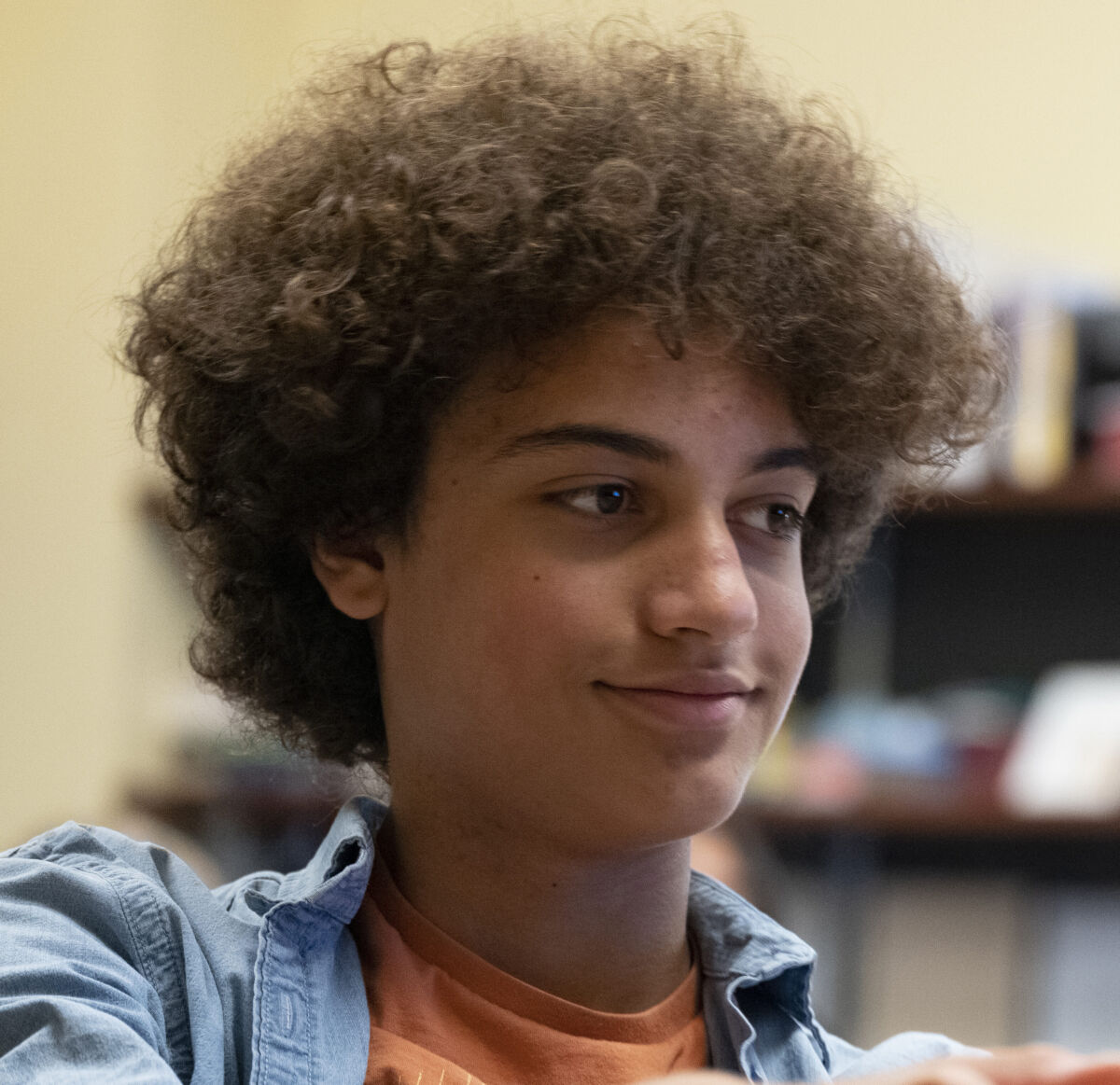
Grade Level Overview – 7th Grade
7th grade curriculum is designed to meet students where they are in their personal and academic growth. We leverage their natural curiosity, developmental identity formation process, need to connect to peers and the wider community, and strong sense of justice.
This curriculum engages students in a balance of independent and collaborative work, inquiry-based thinking, and creative projects. We celebrate the 7th grade’s place in the “middle of the middle” of students’ academic journey, treating it as an opportunity for them to reflect on where they have been and where they are going, while also honoring exactly where they are now.
7th Grade Requirements
-
Arts:
- Options in Visual Arts
- Performing Arts
- Technology & Design (two classes per term)
-
Environment:
- Two ten-minute periods per week
-
Humanities:
- (a double block, integrating history and language arts)
-
Modern Language:
- Level 1A Chinese or Level 1A Spanish
-
Math:
- Math 7 (2nd year of Pre-Algebra) or Algebra 1
-
Science:
- Life Science
-
Physical Education:
- Sports and Non-sports Offerings
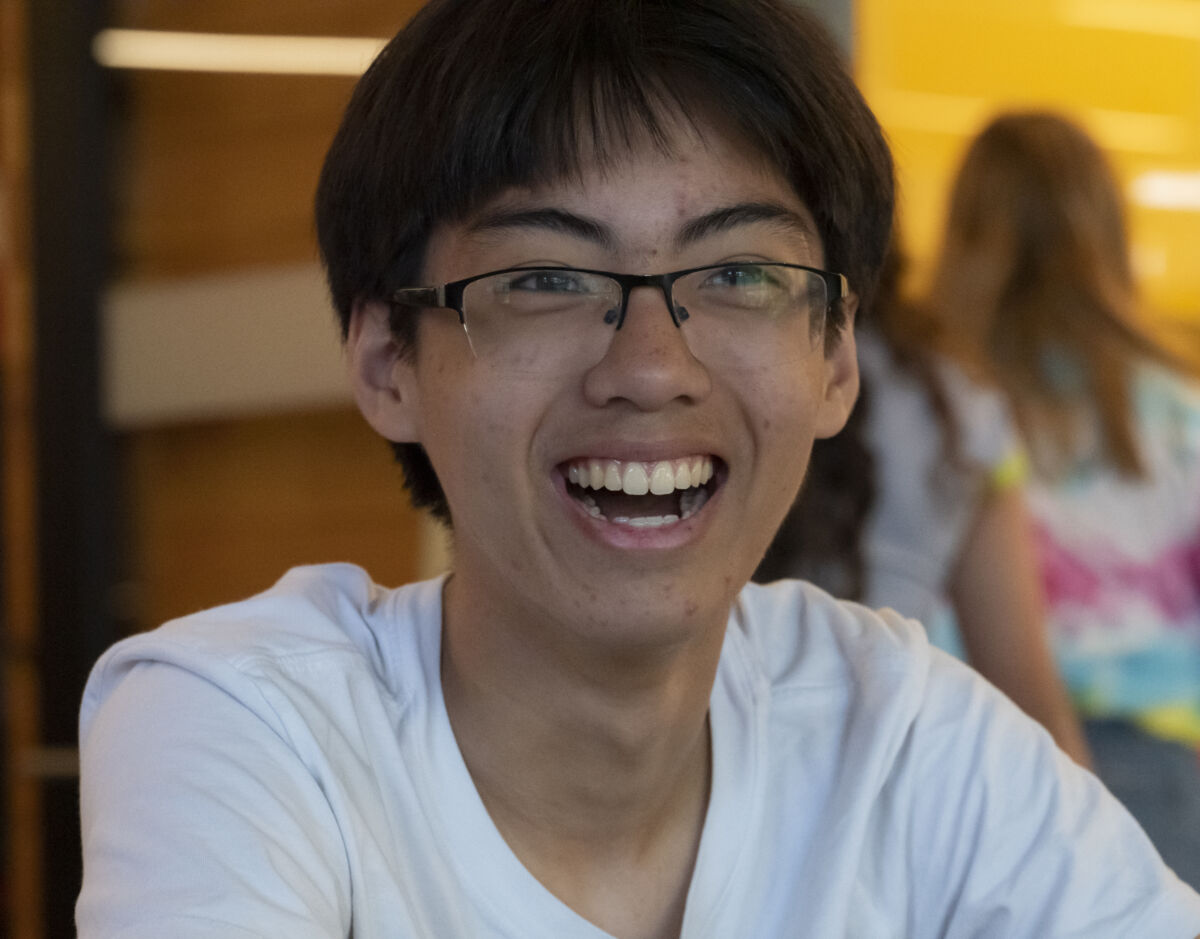
Grade Level Overview – 8th Grade
The 8th grade curriculum supports and engages all students as they step into leadership roles as they complete their final year of middle school.
We help students foster a deeper sense of ownership over their learning on the road to self-advocacy. Northwest aims to equip students with skills and tools to meet the challenges of 8th grade while preparing them for the coming challenges of Upper School and beyond.
8th Grade Requirements
-
Arts:
- Options in Visual Arts
- Performing Arts
- Technology & Design (two classes per term)
-
Environment:
- Two ten-minute periods per week
-
Humanities:
- (a double block, integrating history and language arts)
-
Modern Language:
- Level 1B Chinese or Level 1B Spanish
-
Math:
- Algebra 1, Geometry, or Algebra 2
-
Science:
- Earth Science
-
Physical Education:
- Sports and Non-sports Offerings
Middle School Course Catalog
Foundations
The year-long Foundations course prepares 6th grade students for the academic and technological demands of middle school and introduces them to two modern languages.
Early in the year, students learn study and self-regulation skills, including time management, planning, study strategies, organization, goal setting, and metacognition. These skills are applied to their work in other courses.
Students also develop proficiency with digital tools, including Northwest’s Canvas learning management system, a variety of project management tools, digital authoring tools, and collaborative technologies necessary for academic success across all subject areas.
They are also introduced to Applied Computer Science, preparing them to engage in technology courses in the years to come.
During the second half of the year, students study Spanish and Chinese to prepare them to select their language pathways starting in 7th grade.
Humanities
This course provides an interdisciplinary exploration of literature, writing, art, history, philosophy, and geography, focusing on the human experience. Each semester, we engage in projects, reading, and writing – individually and in groups – to grow proficiency in new skills and content.
We begin the school year with a focus on identity, including topics such as characterization, personal writing, the foundations of research, geography, early humans, and Mesopotamia. Throughout the course of the year, we build on these academic skills as we study the additional ancient civilizations of Egypt, Greece, China and Mesoamerica. We also take every opportunity to work across disciplines with faculty in the arts.
A major emphasis in our curriculum is reading. In addition to reading prose and poetry as a whole class, students select books for independent reading. These novels can be chosen from lists curated by our school librarian and foster our belief that students should read across a wide and diverse range of stories that both reflect their personal experiences and also offer them windows into whole new worlds.
We also engage actively in building up reading practices for progressively more challenging texts, including before, during, and after reading strategies and other supportive methods.
In addition, students will grow in important ways beyond content learning. We will develop organizational skills, collaboration, leadership, and social/emotional learning throughout the year.
Humanities 7 is a case study approach to Washington State history, geography and literature, in the larger context of the U.S. 20th Century. Students will consider how key events and issues in Washington State have connected to, stemmed from, or influenced larger historical trends in the nation as a whole.
Throughout the year, students read a variety of texts, including primary and secondary sources, historical fiction, sci fi, novels, and poetry. With an emphasis on close and critical reading, students refine their reading and annotating skills and learn how to use diverse types of evidence to support their points, whether being made in class discussions or in their writing.
Students also have opportunities to write in varied genres, which include poetry and fiction as well as analytical writing. All that said, we frequently focus on sentences, considering their vast variety and the best ways to make every word matter, whether living in a phrase, clause, sentence, paragraph, or something larger.
We focus closely on inquiry, a pursuit that often begins with shaping questions, followed by efforts to answer them. In strengthening students’ research skills, we prioritize crafting compelling and complex questions, evaluating sources, careful documentation, and engaging in this work as curious, creative, and resourceful scholars.
Humanities 8 is a global history and literature course that focuses on three regions of the world: West Africa, Central America and the Caribbean, and South Asia, as case studies for exploring the interplay among geography, history, culture, literature, and the arts.
The course begins with a brief unit in which students are introduced to foundational humanities skills through the study of a country currently on their consciousness because of recent political or world events. For the 2025–2026 school year, the focus was on Sudan.
Throughout each unit, students build foundational skills for studying history and literature, including note-taking; identifying, vetting, using, and documenting sources; annotating texts; summarizing and synthesizing information; and informative, argumentative, and narrative writing.
At the center of the course is inquiry. A critical commitment of Humanities 8 is helping students develop meaningful questions and become increasingly able to answer them fully and persuasively.
A rich medley of resources ranging from artifacts, artwork, music, literature, maps, essays, podcasts, short stories, and novels supports our exploration of the historical and cultural causes and consequences that have shaped the history, culture, and current political realities of each region studied.
Guiding Questions:
- How do cultural identities differ from national identities?
- How does geography impact where and how people live?
- In what ways do resources dictate power?
Mathematics
The journey of a Math 6 student begins in Unit 1, where familiar rectangles become steppingstones to understanding the hidden logic of parallelograms and triangles. By exploring their surface areas, students will unlock a new layer of spatial reasoning. Unit 2 marks a turning point as they encounter ratios, a recurring theme that will echo throughout their academic years. Double number lines, tables, and tape diagrams become tools for navigating this new terrain, preparing them for the challenges of Unit 3. Here, they conquer unit conversions, calculate unit rates, and conquer the mysteries of percentages.
In Unit 4, the battlefield shifts to fractions. Students learn to divide these elusive numbers using two distinct strategies, wielding them to solve problems involving lengths, areas, and volumes. Building upon this foundation, Unit 5 refines their understanding of decimals, adding, subtracting, multiplying, and dividing with newfound confidence.
Tape diagrams make a triumphant return in Unit 6, joined by the novel hanger diagrams, both offering powerful strategies for solving equations. This unit also marks the introduction of exponents and the intricate world of equivalent equations.
Unit 7 ventures into the uncharted territory of negative numbers, encountering them on the number line and the coordinate plane. This expansion of their numerical landscape paves the way for the final unit.
In Unit 8, students become data detectives, learning to make sense of information through measures of center and spread. They discover the power of statistics, uncovering the stories hidden within numbers.
Thus, the journey concludes, leaving behind a student equipped with a vast arsenal of mathematical tools and a newfound appreciation for the fascinating world of numbers. Students can expect to feel excited, challenged, and encouraged throughout this course.
Students begin this course examining rational numbers less than zero, expanding their understanding of arithmetic using negative numbers.
Students begin the study of linear equations with one and two variables and deepen their knowledge of equivalent expressions. They build on their understanding of proportional relationships from Math 6 to study linear relationships, expressing linear relationships using equations, tables, and graphs, and drawing connections across these representations.
Students extend the definition of exponents to include all integers, thereby codifying the properties of exponents. They learn about orders of magnitude and scientific notation to represent and compute with very large and very small quantities.
This course builds the mathematical foundation to all other Upper School math courses. Students move on to expand their understanding of linear equations, inequalities, and systems of linear equations and inequalities. They use these representations to model relationships and constraints but also reason with them abstractly.
Students write, rearrange, evaluate, and solve equations and inequalities, explaining and validating their reasoning with increased precision. Students deepen their understanding of functions and their ability to represent, interpret, and communicate about them using function notation, domain and range, average rate of change, and features of graphs.
They also see categories of functions, starting with linear functions (and their inverses) and piecewise-defined functions (including absolute value functions), followed by quadratic functions. For each function type, students begin their investigation with real-world and mathematical contexts, look closely at the structural attributes of the function, and analyze how these attributes are expressed in different representations.
The course ends with a close look at quadratic equations. Students extend their ability to use equations to model relationships and solve problems. They develop their capacity to write, transform, graph, and solve equations by reasoning, rearranging equations into useful forms, and applying the quadratic formula.
In solving quadratic equations, students encounter rational and irrational solutions, providing an opportunity to deepen their understanding of the real number system.
Geometry is a course of logic and problem-solving in both two and three dimensions. Students begin learning the fundamentals of geometry, such as points, lines and angles. They build on those concepts by working with congruence, scale factors, and similarity in polygons. Logical reasoning is emphasized through justification of processes and writing formal proofs to defend reasoning.
Students then engage more deeply with triangles, through which they are introduced to the Pythagorean Theorem, special right triangles, and right triangle trigonometry. Properties of circles are then explored to solve for area, circumference, tangent lines, sectors, arcs and segments.
Students work with geometric concepts in the coordinate plane, and compute area and volume. Students toy and tinker with these skills and concepts through hands-on projects, such as discovering properties of right triangle trigonometry with clinometers, measuring tape, and curiosity.
Throughout the year, students will reinforce skills learned in Algebra I and connect them to geometry.
Prerequisite: Successful completion of Algebra I.
Students begin the course with a study of sequences, which is also an opportunity to revisit linear and exponential functions. Students represent functions in a variety of ways while addressing some aspects of mathematical modeling. This work leads to looking at situations that are well modeled by polynomials before pivoting to a study of the structure of polynomial graphs and expressions.
Students do arithmetic on polynomials and rational functions and use different forms to identify asymptotes and end behavior. Students also study polynomial identities and use some key identities to establish the formula for the sum of the first terms of a geometric sequence.
Next, students extend exponent rules to include rational exponents. They solve equations involving square and cube roots before developing the idea of a number whose square is negative, expanding the number system to include complex numbers. This allows them to solve quadratic equations with non-real solutions.
Building on rational exponents, students return to their study of exponential functions and establish that the property of growth by equal factors over equal intervals holds even when the interval has non-integer length. They use logarithms to solve unknown exponents and are introduced to the number e and its use in modeling continuous growth.
Logarithmic functions and some situations they model well are also briefly addressed. Students learn to transform functions graphically and algebraically.
Prerequisite: Successful completion of Geometry or completion of Apex Geometry (summer course work).
Science
This course introduces students to the myriad opportunities for scientific study through thematic units centered around the theme of energy. The course emphasizes scientific inquiry, engineering challenges, independent and group projects, and creative problem-solving.
Students learn research and reporting skills, as well as laboratory inquiry and safety. The class challenges them to design experiments to answer their own questions about how things work. We aim to have each student see themselves represented in a scientific field and to imagine the many STEM opportunities available to them.
Sample units include:
- Skills of the Scientist
- Who Can Be a Scientist? (Challenging Stereotypes)
- Work, Power, and Simple Machines
- Engineering Design
- Coding Topics
- Energy Forms and Sources
- Electricity and Circuits
- Chemistry Topics and Laboratory Skills
This course is a survey of the life sciences and is grounded in the Next Generation Science Standards.
The primary goals of this course are to identify the basic needs of living things and explore the connections between these organisms and their environment. Each unit seeks to make connections between science domains using crosscutting concepts.
Topics include cells (eukaryotes and prokaryotes), cellular respiration, human body systems, photosynthesis, matter cycling, ecosystems, biodiversity, and evolutionary biology.
The goal of this course is for students to gain a basic understanding of planet Earth’s systems and characteristics as we understand them today.
The course starts with a study of the geosphere, focusing on plate tectonics and rock types. Students then learn about the hydrosphere and atmosphere, examining how each earth subsystem interacts.
Through modeling and investigation, students learn about seasons, climate and the Earth-Sun relationship. The course culminates in a study of climate change with students taking part in a global mock climate change summit.
Emphasis is placed on hands-on activities, close observation skills, modeling, and cooperation.
Modern Languages
Introduction to Chinese and Spanish
Students are introduced to Spanish and Chinese as part of the Foundations course. Over the course of the year, students will receive six weeks of instruction in both languages so they can more intentionally choose their language pathway starting in 7th grade.
Seventh-grade students choose between Mandarin Chinese or Spanish.
Chinese 1A
This course is an introduction to standard Chinese (Mandarin). Students learn the Pinyin Romanization system and use acquired oral language skills in a variety of activities and games. While the primary focus is oral proficiency, students also learn to read and write basic Chinese characters and recognize those words in context.
At the end of this course, students reach the ACTFL Novice Mid level of oral proficiency. At this level, students have acquired the following Chinese language skills: ask and answer basic questions, make simple self-introductions, and describe likes and dislikes. In addition, students deliver short oral presentations in Chinese and engage in short reading and writing activities.
Students employ these skills in familiar contexts, such as family, leisure activities, home and school life, and Chinese food, festivals, and traditions. Films may include The Road Home (Wo de fuqin muqin) and Postmen in the Mountains (Na shan, na ren, na gou), which give insight into Chinese family life and rural society. Films will be watched with English subtitles, occasionally focusing on the Chinese dialogue for comprehension.
Spanish 1A
This course is for students with little or no background in Spanish and is taught in Spanish. The course focuses on teaching the “Five Cs” goals of the American Council on the Teaching of Foreign Languages (ACTFL): Communication, Cultures, Connections, Comparisons, and Communities.
Students learn at this novice level how to talk about themselves, school and family life, numbers, the alphabet, the weather, hobbies, and school classes. Students also learn to discuss the diversity of people in Latin America and the Spanish-speaking world and engage in various listening, reading, writing, and speaking activities.
At the end of this course, students reach the ACTFL Novice Mid level of oral proficiency. At this level, students have acquired the following Spanish language skills: ask and answer basic questions, make self-introductions, and describe likes and dislikes.
Chinese 1B
This course continues from the 7th grade Chinese Mandarin course. Students continue to learn and practice the Pinyin Romanization system and use acquired oral language skills through various activities and games. By the end of this course, students reach the ACTFL Novice High level of oral proficiency, having acquired the following language skills: ask and answer basic questions, make self-introductions, and describe likes and dislikes.
At this level, students also deliver several short oral presentations in Chinese and engage in reading and writing activities. Students employ these skills in familiar contexts, such as family, leisure activities, home and school life, Chinese food, festivals, and traditions. Students also take part in a field trip to Chinatown, where they can experience the culture firsthand.
By the end of the course, students acquire the following skills: ask and answer basic questions, engage in simple conversations about their pastimes, hobbies, food, and shopping, and be able to talk about their school and family life.
Spanish 1B
This course is the second half of Spanish 1 (1A is the first). The course is taught in Spanish and focuses on teaching the “Five Cs” goals of the American Council on the Teaching of Foreign Languages (ACTFL): Communication, Cultures, Connections, Comparisons, and Communities.
Students continue reviewing and engaging in conversations about themselves and family. They learn at the Novice Mid-High levels how to talk about pastimes and sports, make plans, travel, food, and shop. Students examine these topics in the Spanish-speaking world, allowing them to connect and compare their experiences. Students engage in various listening, reading, writing, and speaking activities.
By the end of the course, students reach the ACTFL Novice High level of oral proficiency. They will have acquired the following skills: asking and answering basic questions, engaging in simple conversations about their pastimes, hobbies, food, and shopping, and discussing their school and family life.
Physical Education
Middle School PE is a required, year-round class that every student takes all 3 years of Middle School. These classes are also where our team sports program takes place.
Students who wish to participate in a team sport will sign up for that class as their PE class for that semester. There are some classes that are not built around team sports for those students who do not wish to participate in a team sport for that season.
All games and meets take place immediately after school on weekdays. There are no weekend commitments. All teams participate in the CrossTown Middle School League.
Teams will mostly be divided by skill, with 6th graders often forming their own team whenever possible. Classes are designed to fit the needs of beginners and highly experienced athletes alike.
Fall Sports
Soccer
Students need soccer shoes, shin guards and shorts. Games take place after school. Practices take place either on the NWS Rooftop turf field, or on the turf field at Cal Anderson Park. Teams will mostly be divided by skill, with 6th graders forming their own team whenever possible.
Cross Country
Students have four great reasons to run cross country: to get in great shape, visit beautiful places (students run in various locations throughout Seattle), participate in some exciting competitions (one or two 1.5-mile races each week), and be part of a fun team with lots of camaraderie. No previous experience is necessary, and the team is filled with runners at every speed level.
Girls Volleyball
Teams practice in the school gymnasium and play games on weekdays. All levels and experience are welcome.
Winter Sports
Basketball
Northwest basketball teams practice in the on-campus gymnasium or at a nearby church gym. Home games take place in the school gymnasium. Students need basketball shoes, shorts, and a water bottle. Teams will mostly be divided by skill, with 6th graders forming their own team whenever possible.
Spring Sports
Track and Field
Students practice a wide range of track and field events including sprinting, distance running, jumping, throwing, relays, and more. Meets are held on Friday afternoons.
Ultimate Frisbee
Discover why this game has become a Northwest School obsession. At the same time, join a tradition of school excellence in the quality of play and spirit of the game. No previous disc or ultimate experience is required, just a lot of energy and enthusiasm. Cleats, shorts, and a water bottle are all you need. Practices take place either on the NWS Rooftop turf field or on the turf field at Cal Anderson Park. Teams will mostly be divided by skill, with 6th graders forming their own team whenever possible. All levels and experience are welcome. Class times are used for skills practice and scrimmages. Games played against other teams are scheduled on weekdays.
Non-Sports Classes
Each year, we offer an array of PE classes not based on team sports. We offer classes each year based on student interest, teacher interest and experience, and facility availability.
Variety
As the title says, students enrolled in this class will engage in various athletic activities that promote fitness to students with a wide range of abilities and experience. On any given day, students may find themselves playing pickleball or badminton in the gym, handball on the rooftop turf, or challenging themselves in our fitness mezzanine.
Indoor Bouldering & Rock Climbing
Students have an opportunity to challenge themselves within the safe confines of the Seattle Bouldering Project. This class focuses on climbing efficiency and technique. Students work on strength, flexibility, balance, and other aspects of physical fitness essential for climbing. Students may have an option to participate in a climbing competition. No previous experience required. This class is only offered in the winter.
Urban Hiking
In this class, students explore anywhere we can get to by foot. Some days, that means places in nature, other days urban locations and playgrounds. Students encounter people and pets, climb stairs and cross bridges, observe art and architecture, and sometimes eat tasty treats. The only requirement is an open mind, a generous spirit with classmates and a readiness to put one foot in front of the other in pursuit of adventure.
Performing and Visual Arts
As core classes, the arts are at the center of the 6th grade experience at Northwest. Students dive into the arts with introductory classes in each of our four arts disciplines: Dance, Music, Theatre, and Visual Arts. Students enroll in two arts classes each semester. See below for course descriptions.
DANCE
Jump Into Dance
Jump Into Dance is a semester length introductory course for grade 6. This class offers a welcoming experience focusing on universal dance and movement concepts. In this class, we will JUMP into learning about the foundations of movement and the creative process. Students will explore and apply movement principles such as space, time, energy, and flow through creative play to plant the seeds of their artistic voices!
MUSIC
For Instrumental Music courses, students may either bring their own instrument or rent an instrument from the school. The instrument rental fee is $100 per semester.
Intro to Band
For grades 6, 7, and 8 with limited or no prior experience! All middle school students are welcome to learn a new band instrument in this semester-long course. Celebrations of music-making will happen at school concerts and on possible field trips. Instrument options are as follows: flute, clarinet, alto saxophone, tenor saxophone, trumpet, trombone, baritone, or percussion (this includes drums AND mallet instruments).
Intro to Strings
Introduction to Strings is a semester-long course for grades 6-8 that offers students the opportunity to make music with string instruments (violin, viola, cello, and bass). The content knowledge and skills introduced in this class prepare students for additional music making opportunities at The Northwest School and beyond. This class is ideal for students with limited or no prior experience. A sincere desire and motivation to make music with a string instrument is all that is required!
Middle School Vocal Music
Students will learn important vocal skills and techniques (breath support, vocal placement, tone, dynamics, projection, expression, harmony, etc...) to help them bring out the best in their voices and grow in their confidence as singers. Students will form a vocal ensemble, learn collaboration skills, and rehearse a variety of relatable songs to perform in school concerts and out of school concerts and opportunities as well as participate in a solo/small group. Students will also engage in activities related to vocal improvisation, creative play, and songwriting. This semester-long class is open to all ability levels - everyone has a voice, and we all are singers!
THEATRE
Intro to Theatre
Intro to Theatre is an acting based class that will introduce students to the fundamental elements of the theatre world and to acting as a fun and creative form of expression over the course of one semester. Students will learn the language of the theatre and become familiar with its traditions and etiquette. They will learn how to act through improvisation and scripted material. Students will develop the actor's instruments (voice, mind and body) and practice performing.
VISUAL ARTS
Intro to Visual Art
This class is designed for all 6th graders and serves as the foundation of the Visual Arts program at The Northwest School. Students explore the elements of art—line, color, texture, shape, and space—through a variety of creative projects. Working across multiple media, students experiment with drawing, painting, sculpture, collage, photography, and digital drawing as ways to develop ideas and express themselves visually. Daily sketchbook exercises build observation skills and creative confidence, while new vocabulary and discussions of both contemporary and historically significant artists help students understand how art connects to culture and personal expression. The course concludes with an independent project in which students apply the techniques and ideas they have learned to create a work of their own.
DANCE
Middle School Dance Ensemble
MSDE is a yearlong course for 7-8th graders who want to deepen their dance interests and focus on performance and community leadership. This class requires a dedicated ensemble commitment. Students will learn and build a variety of dance skills in contemporary, jazz, and hip-hop. Students will have the opportunity to work with guest choreographers and perform multiple times throughout the year. MSDE prepares students to move into the upper school Performing Dance Ensemble (PDE). *Interest meeting required
Authentic Jazz Dance
Jazz dance can be seen in Broadway shows, movies, television, and concert dance. In this semester-long course students will learn the history of jazz dance and its roots in African American social dance, lindy hop and theater dance. Students will explore upbeat and energetic dances such as the Shim Sham and the Charleston and try out classic steps like Apple Jacks, Mess Around, and Tacky Annie. Dancers in this class will learn choreography and create their own as well. Dancers will work as an ensemble and perform for the community at the end of the term. This course is open to all interested 7-8th graders.
Hip Hop & Street Styles
There are so many different styles of club and street dances that fall under the umbrella of hip-hop dance. In this semester-long course, students will learn basic techniques and history of a sampling of these styles including breaking, popping and locking, party dances, and house. They will work to explore and improve their understanding of groove and musicality, footwork, isolation, and personal style and improvisation. Students will also learn studio/commercial hip-hop and see how this style has been influenced by the social dances that came before as well as pop culture, media, and business. Dancers will work as an ensemble to perform for the community and get the opportunity to create their own dances. This course is open to all interested 7-8th graders.
MUSIC
For Instrumental Music courses, students may either bring their own instrument or rent an instrument from the school. The instrument rental fee is $100 per semester.
Intro to Band
For grades 6, 7, and 8 with limited or no prior experience! All middle school students are welcome to learn a new band instrument in this semester-long course. Celebrations of music-making will happen at school concerts and on possible field trips. Instrument options are as follows: flute, clarinet, alto saxophone, tenor saxophone, trumpet, trombone, baritone, or percussion (this includes drums AND mallet instruments).
Middle School Band
This is a yearlong intermediate band course for 7-8th grade students with at least one year of instrumental experience. We explore different styles of music from traditional concert band pieces to movies and pop music. There are various celebrations of music in the form of concerts, field trips, and festivals throughout the year. Instrument options are as follows: flute, clarinet, bass clarinet, oboe, bassoon, alto saxophone, tenor saxophone, baritone saxophone, trumpet, French horn, trombone, baritone, tuba, or percussion (this includes drums and mallet percussion).
Middle School Vocal Music
Students will learn important vocal skills and techniques (breath support, vocal placement, tone, dynamics, projection, expression, harmony, etc...) to help them bring out the best in their voices and grow in their confidence as singers. Students will form a vocal ensemble, learn collaboration skills, and rehearse a variety of relatable songs to perform in school concerts and out of school concerts and opportunities as well as participate in a solo/small group. Students will also engage in activities related to vocal improvisation, creative play, and songwriting. This semester-long class is open to all ability levels - everyone has a voice, and we all are singers!
Intro to Strings
Introduction to Strings is a semester-long course for grades 6-8 that offers students the opportunity to make music with string instruments (violin, viola, cello, and bass). The content knowledge and skills introduced in this class prepare students for additional music making opportunities at The Northwest School and beyond. This class is ideal for students with limited or no prior experience. A sincere desire and motivation to make music with a string instrument is all that is required!
Middle School String Orchestra
Middle School String Orchestra is a yearlong course for students in grades 7-8 with at least one year of instrumental experience (violin, viola, cello, and bass). Students should already possess a fundamental knowledge of music literacy and instrumental performance techniques. This class is designed to support students that are seeking to enhance their skills as a string player and musician.
THEATRE
Intro to Theatre
Intro to Theatre is an acting based class that will introduce students to the fundamental elements of the theatre world and to acting as a fun and creative form of expression over the course of one semester. Students will learn the language of the theatre and become familiar with its traditions and etiquette. They will learn how to act through improvisation and scripted material. Students will develop the actor's instruments (voice, mind and body) and practice performing.
Acting for the Stage
Acting for the Stage is a semester-long course that explores the fundamentals of acting. Students will explore classical acting theory, exercises and techniques for the development of voice, speech, freedom of expression and physicality. Students will play improvisation games, practice text analysis, and experience monologue and scene work. This course is open to all interested 7th and 8th graders and culminates in a sharing of theatre games, monologues, and scenes for an invited audience.
Musical Theatre
Musical Theater is a semester-long class that centers on building the specific skills needed to perform musical theater on stage. Students will explore acting, singing, staging, and movement as well as audition preparation, rehearsal, and performance. Students will develop stage presence, vocal techniques, and storytelling skills through creative play, while working collaboratively as an ensemble. Musical Theatre is open to all interested 7-8th graders and culminates in an end of term sharing for an invited audience.
MS Theatre Production
This is a semester-long class for 7-8th graders who want to explore and deepen their acting skills and participate in a full rehearsal process and performance. Students will learn about the world of theatre and how to function as an actor in a show. We will perform a play or musical that will allow everyone to shine. Some after-school rehearsals are required. If you register for this course, you will be in the show! Middle School Theatre Production prepares students to move into the Advanced Theatre Production course in upper school. Interested rising 7th & 8th graders must attend a meeting during auditions week to learn about all the exciting things that we have planned for next year.
VISUAL ARTS
All middle school visual arts classes are one semester long.
Ceramics
This exciting and challenging hands-on ceramics course is an introduction to the basics of ceramics/ pottery. No experience is required, and students may take ceramics more than once in Middle School. With each class, we embark on new, creative, diverse projects that encourage students to be in control of the direction of their work. We learn and employ the elements and principles of art and design as we create and explore the vast world of art. We experiment with both ceramic sculpture and functional pottery (like cups, vases, and bowls). While primarily a “handbuilding” class, we also create a fledgling project on the potter’s wheel! To glaze our masterpieces, we have more than 40 colorful and mesmerizing glazes to choose from. Occasionally, we integrate new materials into our artwork, including a bit of metal, wire, and melted glass. Our clay easily washes off, does not stain clothes, and students can keep (or gift) whatever they make! Let’s get started and make our ceramic dreams come true.
Collage: Cut Paper and Adobe Photoshop
In this course, students explore the histories of collage and create experimental collage artworks. Students will complete projects using mixed media art on paper and digital art techniques. We will explore how concepts of line, shape, form, value, space, and texture apply to collage, and how artists can use these concepts to tell original, multi-layered stories through their artwork. Students will create all their work in the Skylight Print Studio, using a combination of physical art studio materials and digital art software. Students will have the opportunity to use Adobe Creative Cloud® and/or Procreate® software in this class. There is no experience necessary!
Printmaking: Procreate to the Printing Press
Learn how to transform your original drawings, designs, and collage artworks into beautiful graphic art prints. Projects introduce monotype, collagraph, and relief printmaking methods and incorporate both traditional and digital image-making processes. You learn how printmakers “think in layers” and by the end of the semester you develop new image composition skills, graphic design skills, and drawing skills. In addition to learning about how to make prints, you also learn about the ways that the art of printmaking has played a key role in movements for social justice throughout history. You work with a range of physical artmaking materials as well as Adobe Photoshop® and/or Procreate® software in this class. There is no experience necessary! This class is for 7/8th grade art block.
Digital Animation Studio
In this class you learn to appreciate and create short digital animations with sound. Animation and motion design projects, incorporate a range of experimental digital image-making skills including digital drawing, digital collage, working with layers, and using animation timelines. The primary software we use is Procreate® on an iPad Pro. There are options to work with Adobe Photoshop® or Adobe Animate®. We explore animation for character animation, motion graphics, and fine art animation. There is no experience necessary! This class is for 7/8th grade art block.
Stop Motion Animation Studio
In this class you will create two-dimensional and three-dimensional “desktop” stop motion animation artworks using a range of media and materials. As you create your own animations, you will gain skills in cinematography, puppet design, collage, drawing, storyboarding, and audio design. We will study historical animation examples as well as contemporary animation examples. You will learn to use a range of creative production software on iPad Pros. You will create individual projects and collaborative projects. No experience is necessary! This class builds creativity and critical thinking skills while establishing lifelong confidence to experiment with all forms of animation.
Photography: Exposure
Students learn to compose digital photos using art, design, and photography principles. Students practice the foundations of aesthetic critique while exploring and analyzing the work of master photographers. Throughout this class, students learn how to use a digital camera to take properly exposed photos. Students also spend part of the class modifying their digital photographs using image-editing programs. For creative inspiration, students view and engage with the work of photographers who are important to art history through frequent lectures and discussions. $75 lab fee.
Photography: Storytelling & Creative Practice
Students learn to use the camera as a tool for visual exploration. This class uses the camera to investigate and document the world around us from unique perspectives. We explore important genres such as surrealism and abstraction for inspiration. We practice using our cameras in unexpected ways to achieve striking visual effects. Students also learn about symbolism and visual narrative in important works of art while practicing their own storytelling through photography. $75 lab fee.
Technology & Design
Middle School Design Technology
This is a one-semester technology elective course, offered in one of the “art” blocks, so students enrolled in this course are in only one art class for the term. This course introduces middle school students to the design tools, and technologies of the makerspace through the lens of the design cycle. Using age-appropriate tools and software, students develop technical proficiency and design thinking skills.
Students will first build a shared understanding of human-centered design, then apply that framework across a sequence of hands-on activities and projects. The course begins with cardboard, before moving into digital fabrication with the laser cutter, and finally into three-dimensional design and 3D printing. The course culminates with a final project in which students draw on the full range of tools and skills developed throughout the semester. Open to 7th and 8th grade students.