
Upper School Wins 2026 Food Waste Challenge
- 05/05/2026
- Category: Student Voices Environmental Sustainability Featured
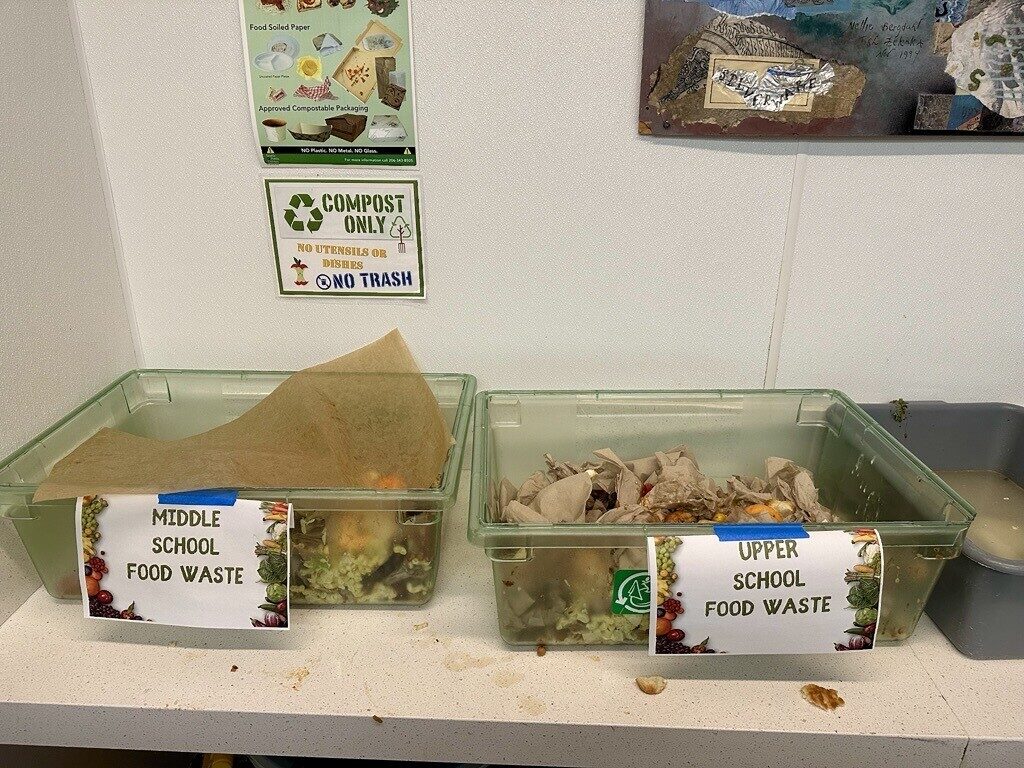
At The Northwest School, our commitment to environmental sustainability and stewardship is more than just a founding principle - it is a daily practice and way of life. And it sometimes shows up in fun and unexpected events... like the Food Waste Challenge led by our student-driven Climate Action Team last week.
In addition to generating a little friendly competition, this was a fantastic way to promote awareness around how much food gets wasted every single day, and its accumulated impact on our environment.
"We’ve done similar food waste challenges in the past," explains Neo Mazur, Director of Environmental Education & Sustainability. "We try to do at least one such challenge each year."
Over the course of two days, the total food waste per person in each division broke down as:
- Middle School - 0.1923 lbs
- Upper School - 0.1894 lbs
- and Faculty - 0.1896 lbs
It was tight, but the Upper School prevailed!
Callum L. (Class of '26), on the Climate Action Team, explains why building awareness around food wastage is important. "Food waste is one of those climate issues that's easy to overlook because it happens in small, everyday moments," he says. "Like a few bites left on a plate, a piece of fruit that goes untouched. The Food Waste Challenge matters to our community because it makes that invisible impact visible."
The Upper School won this challenge - but the more meaningful result to me is that all three groups wasted less than a fifth of a pound per person. That's something that the whole school can feel good about.
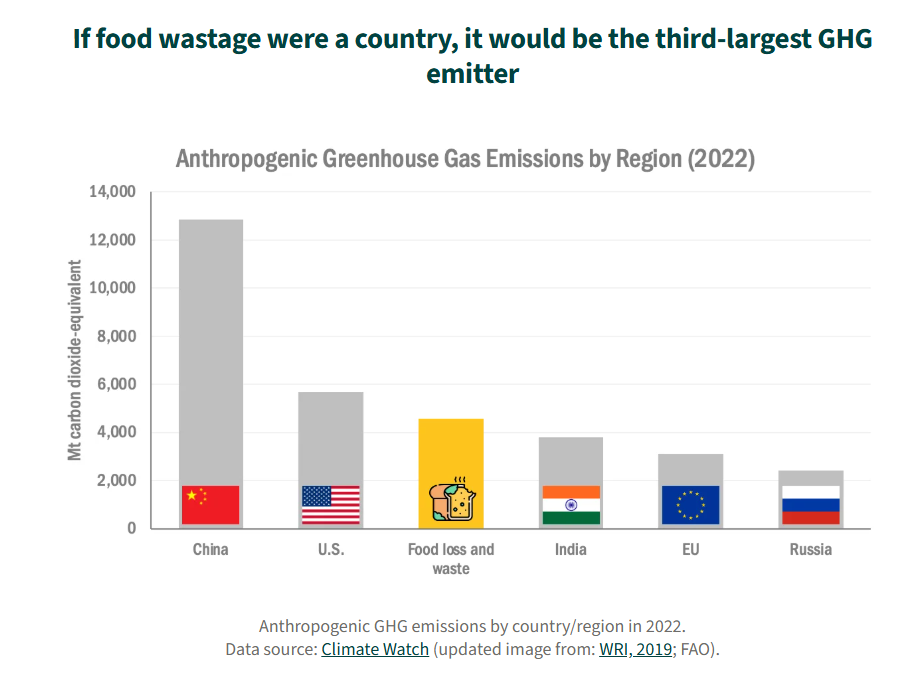
Globally, almost 40% of food that is produced is never eaten (Stanford University, 2025). Food waste refers to more than just discarding food itself - this extends to the energy, labor, land, capital, and other resources that feed into food cultivation, production, and distribution.
It's important to understand the connection between food loss and waste and climate change - as well as the link between climate change, agriculture, and supply chain resiliency (USDA, 2022).
This year, the competition was really close and it seemed like everyone was more mindful of how much food they wasted over the course of both days. Some participants even ate the last few bites off their plate before dumping remaining items into the designated compost bin so as to avoid contributing to their team’s waste total!
My hope is that this challenge brought more awareness to how much wasted food impacts the climate, and also helps people in our community think a bit more about their own food waste.
The Climate Action Team is a student interest group comprised of volunteers who are passionate about building awareness in our school community about how we impact the climate and carbon emissions. One of the primary goals of this group is to help the school reach Carbon Neutrality by 2030. This includes efforts last year to begin transitioning to all-electric school vehicles.
Other similar waste-reduction efforts include educating the community about textile waste through clothing exchanges, having waste sorting competitions during regular Community Meetings, and more.
"NWS has a genuine commitment to reaching Carbon Neutrality, and challenges like this remind us that big goals are built from individual choices," says Callum. "My hope is that even after the competition ended, people are still pausing for just a second before loading up their plate."